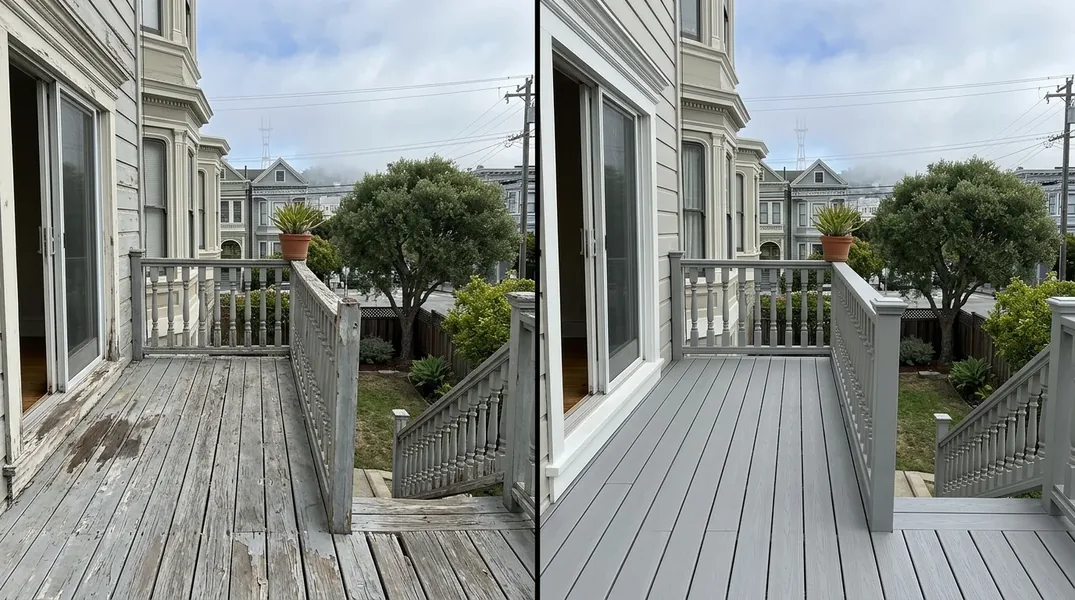
Carpenter in San Francisco, CA: Wood Rot, Structure & Finish Work
San Francisco Carpentry serves homeowners across San Francisco, Daly City, South San Francisco, San Bruno, and Pacifica with the kind of carpentry work that keeps older wood-frame homes standing and livable. Whether you're searching for a carpenter near me in San Francisco or in the surrounding areas, you'll find us doing the same work on every job: structural repairs to rotted joists and beams, termite damage restoration, and the finish carpentry that makes a house feel like home. We know the fog belt and the salt air that come with it, and we understand how a Victorian or Edwardian with a century of settling behaves.
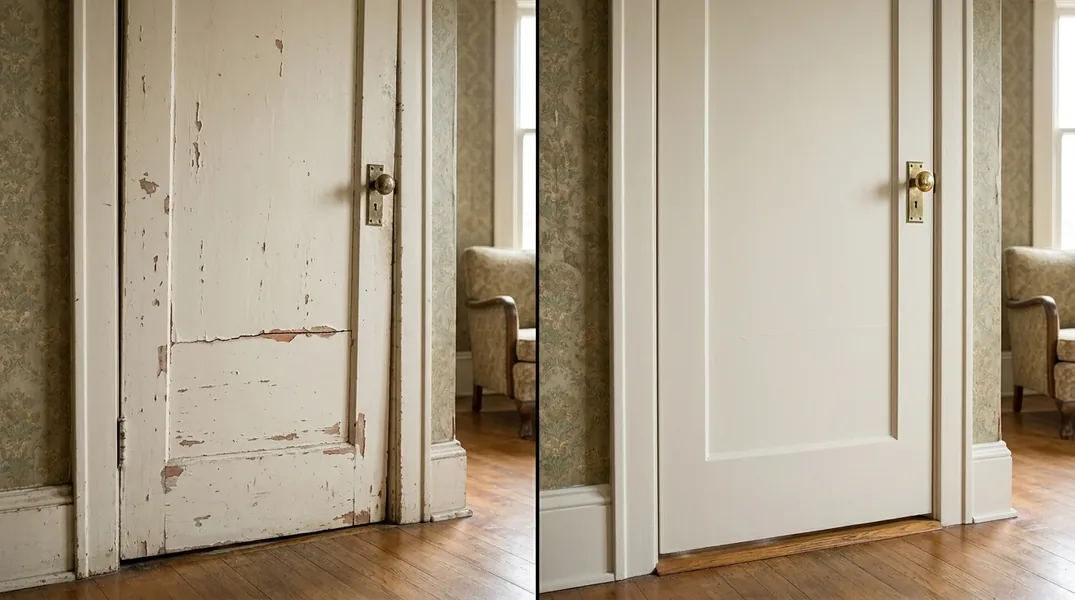
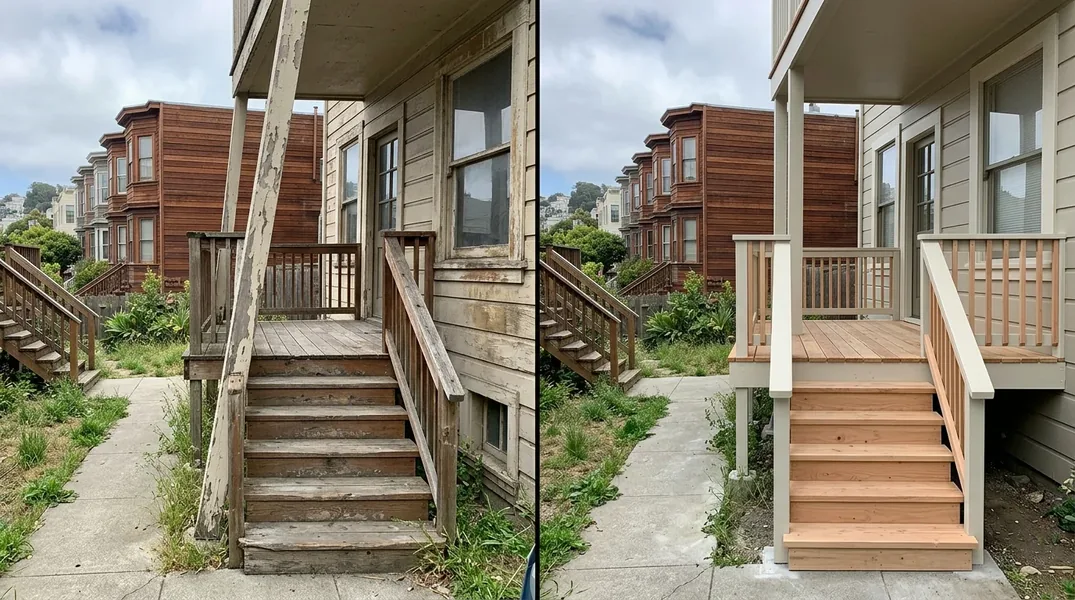
Our work spans from the foundation framing up through trim, casing, and custom built-ins. We repair wood rot and dry rot where it starts, replace floor joists and subfloor sections that have failed, and handle the structural framing that holds everything up. We also install doors, build stairs and railings, and finish the interiors that give these older homes their character. When you call, the same carpenters who estimate your job will do the work. Call (628) 285-5429 to discuss what you're seeing.
Why Wood Fails in San Francisco, and How We Read It
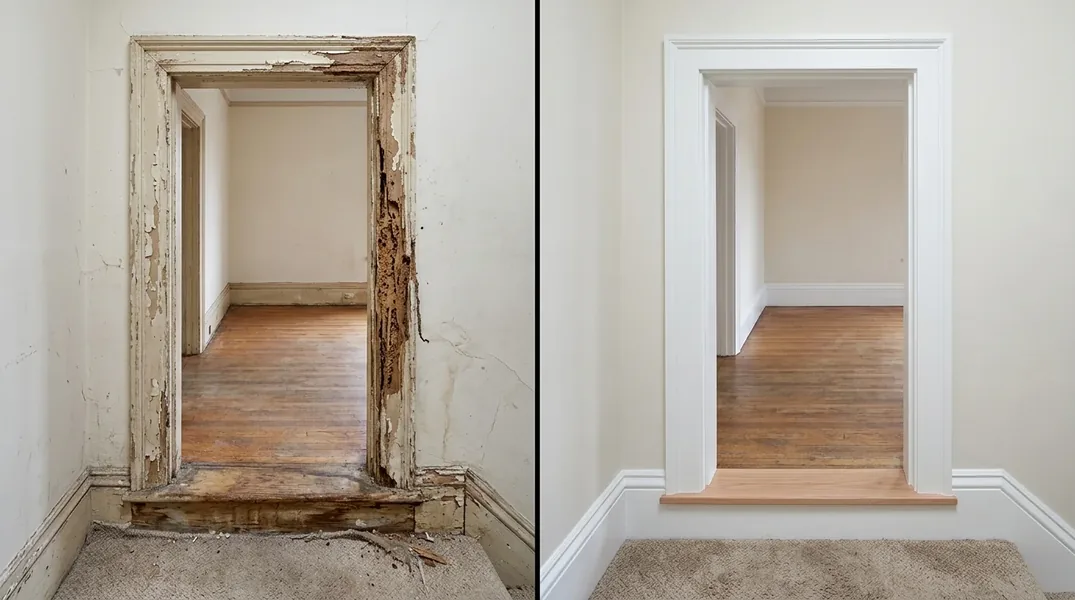
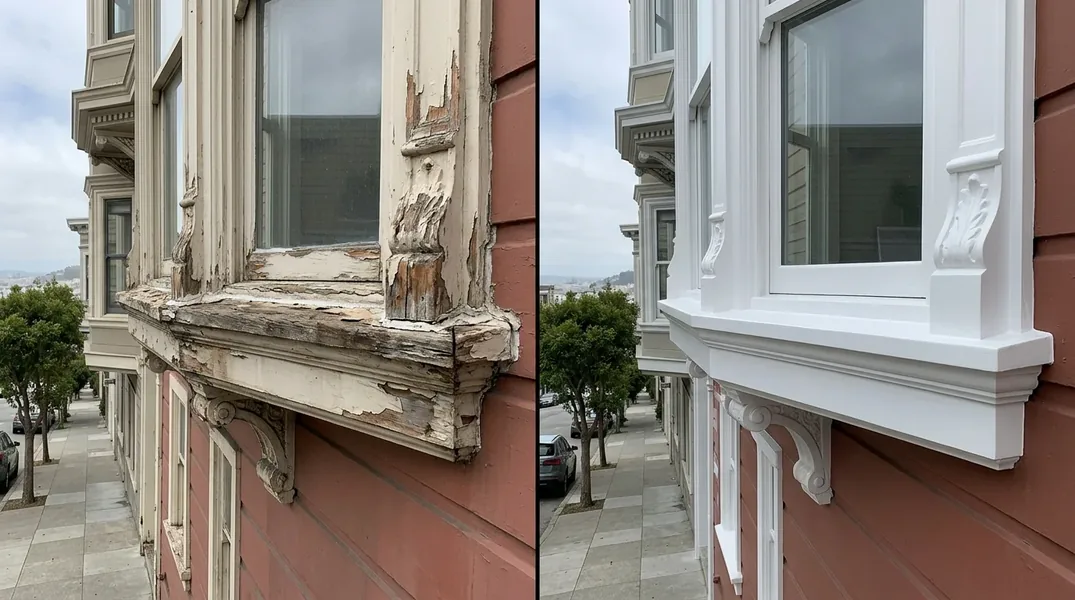
Wood fails in this climate because of how moisture and wood interact. Dry rot is a fungus that needs sustained dampness to grow, and the marine layer and fog here provide exactly that year-round. Unlike standing water, which can dry out, the fog belt keeps exterior wood damp for months at a time. Wet rot settles in at sills, window frames, thresholds, and deck ledgers where water collects and sits. Termite and beetle damage hollow a member from the inside while the painted surface stays intact, so a joist or sill plate can look fine from the outside and be compromised within. These are not mysteries; they follow the water and the conditions that wood needs to decay.
We assess rot by probing to find where sound wood begins, by checking the framing behind the visible surface, and by tracing the water path that fed the decay. A cosmetic surface loss on a sound member can be cut out and the section rebuilt. A member that has lost too much of its cross-section gets replaced, often by sistering a new joist alongside the old one or cutting out the damaged section and splicing in new wood. The honest call is always the same: if the water source is not closed, the repair fails again. Filler over rot is not a repair; it is deferred failure. On termite and beetle damage, we repair and replace the wood that is compromised, working from your own pest inspection report. We do not treat, fumigate, or perform pest control, which is a separate regulated trade. Call (628) 285-5429 for a free wood rot inspection, and bring any pest report you have.
The cost to address rot depends on how far it has gone. A small area on a deck ledger or fascia might be a few hundred dollars. A rotted sill plate or floor joist section can run into the thousands. The question is always whether you are repairing a sound member or replacing one that has lost its structural integrity. We quote both when both are real options, and we explain the difference. Termite damage repair follows the same logic: we read the damage, propose repair where the wood allows it, and replace what has to be replaced.
Structural Carpentry in San Francisco: Joists, Beams and Settling
Structural carpentry in this building stock means understanding what a sloping floor actually is. A house that settled a century ago and has been stable for the last fifty years has not failed; it has found its resting place. Sloping floors and sticking doors are the normal condition here, not a defect to alarm over. What matters is whether something is still moving, whether a beam or joist is doing its job where it bears, and whether the wood is sound. When a floor goes soft or bouncy, or when you see new cracks in plaster or a door that suddenly will not close, that is when we look closely. A floor joist that is sound but undersized can be sistered with a new member alongside it. A subfloor section that has failed gets replaced. A sill plate that is rotted at the rim joist needs to be cut out and rebuilt. Floor joist and subfloor repair is work we do regularly, and it usually costs less than a homeowner expects.
Removing or altering a load-bearing wall, replacing a beam, or opening up a header requires planning. Beam sizing and load-bearing alterations commonly require drawings from a licensed structural engineer and a permit from the local building department. We build to those drawings and to code, but we do not produce engineering drawings or load calculations ourselves. If your project involves beam replacement or load-bearing wall removal, we can guide you on what to expect, and we work with engineers and the building department to get the job done right.
Finish Carpentry and Built-Ins in San Francisco Homes
Finish carpentry is where the craft shows. Coped joints instead of caulked corners, scribing to walls that are neither flat nor plumb, consistent reveals and shadow lines, profiles matched to the original period millwork in a 1920s Edwardian or a mid-century Doelger tract. We install casing around doors and windows, run baseboard and crown molding, and build wainscoting and custom shelving into spaces that were never designed to be square. Bay windows, compact floor plans, and out-of-square openings are the rule here, not the exception. That is why we measure twice and scribe once, and why we match existing millwork rather than replace it with something off the shelf.
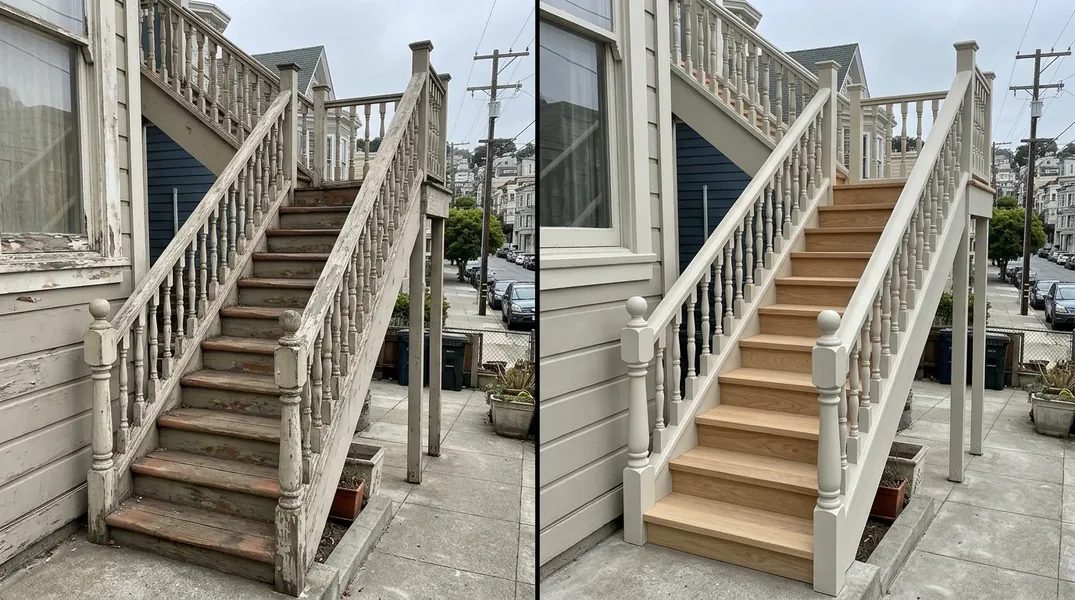
Whether you need crown molding and baseboard installation, custom built-ins and shelving, interior doors and jambs, or stair and railing repair, the work is detailed and deliberate. We build cabinets and vanities to fit the space and the style of your home, and we hang doors so they close smoothly on hinges that will last. This is the work that people see and use every day, and it has to be right.
Permits, Repair-or-Replace & What We Do Not Do
Whether a permit is required depends on the scope of work and your local jurisdiction. In most cases, structural work such as removing or altering a load-bearing wall, replacing beams or joists, and altering stairs or exterior decks commonly requires a permit and often requires engineered drawings. Finish carpentry, trim installation, and cabinet work typically do not. The rules vary, and the thresholds vary. We can tell you what we have seen in the area, but you should always verify with your local building department before starting your project. If a permit is required, we understand the process and we work with the inspectors to get the job approved.
On the question of repair or replacement, the answer comes down to three things: how much sound section of wood is left, whether the water source can be closed, and what each option costs. We quote both when both are real options, and we explain the trade-off honestly. We are fully insured and can help you document damage for an insurance claim, though we cannot promise that a claim will be approved or what your coverage will be. Requirements vary, and thresholds differ from one jurisdiction to another. Always verify with the San Francisco building department before starting your project. Call (628) 285-5429 or reach out online to discuss your work and get a free estimate.
Ready to get started? San Francisco Carpentry serves in San Francisco and surrounding areas. Book your free wood rot inspection today.
Get Your Free Wood Rot Inspection