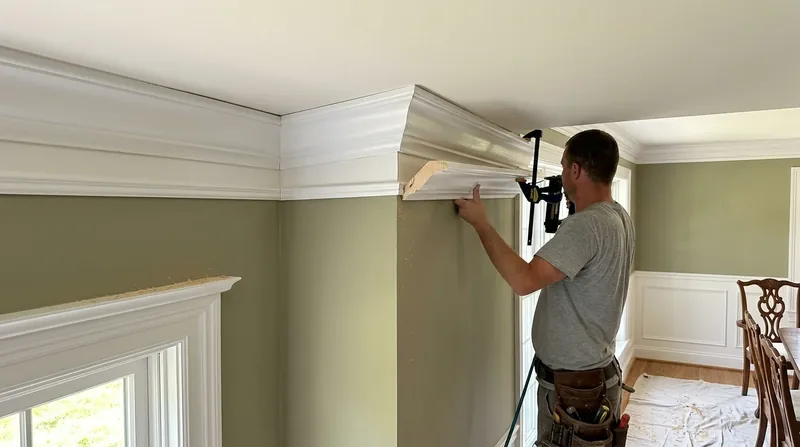




San Francisco's Victorians, Edwardians, and mid-century homes demand crown molding and baseboard installation that respects their period character or complements modern finishes with clean lines and precision joinery. The settlement and drift common to our century-old building stock means floors slope, walls lean, and door openings are rarely square, which is where coped joints, scribing, and careful measurement separate craft from carpentry-by-the-book. We install crown molding, baseboards, and chair rail with the attention to grain direction, color matching, and caulk lines that San Francisco's architectural heritage deserves.
Whether you're restoring original millwork in a Pacific Heights Victorian or finishing a remodeled kitchen in the Sunset, crown molding and baseboard work done right adds real value and visual coherence to a room. We handle the full range: from matching existing Victorian profiles in redwood or Douglas fir to crisp modern baseboard in paint-grade pine or primed MDF. Every joint is coped or mitered cleanly, every reveal is consistent, and every caulk line is struck straight.
Why Crown Molding and Baseboard Installation Matters in San Francisco Homes
Crown molding and baseboard are more than decorative trim. They hide gaps where walls meet ceilings and floors, protect wall surfaces from furniture and foot traffic, and establish the visual rhythm that makes a room feel finished or unfinished. In San Francisco's older homes, original millwork is often worth preserving or matching, and in newer or remodeled spaces, good trim work is the difference between a room that looks professional and one that looks rushed.
The marine climate here also means trim boards absorb and shed moisture year-round. Proper installation includes adequate primer and paint, correct fastening to solid backing (not floating drywall), and caulking that moves with seasonal wood movement. Baseboard that sits tight to the wall and floor, with no gaps or splits, also makes cleaning easier and prevents dust and pests from settling behind it.
- Crown molding bridges the visual gap between wall and ceiling and adds architectural interest to a room.
- Baseboard protects the wall from scuffs, furniture impact, and moisture wicking from floors.
- Coped joints at inside corners stay tight as wood moves with humidity; mitered joints are cleaner but require more precision.
- Scribing allows trim to follow out-of-square walls and uneven surfaces without gaps or shimming.
- Proper caulking and painting seal joints and allow the trim to move without cracking.
Each of these details contributes to trim work that lasts decades and looks right the first time.
San Francisco context: In a Victorian in the Castro or a Doelger home in the Outer Sunset, original baseboard is often 6 to 8 inches tall and sits on wood subfloors that have settled unevenly. We measure and scribe new baseboard to follow the floor contour, ensuring tight fit and professional appearance without the shimming that shows.
How We Install Crown Molding and Baseboard in San Francisco Homes
Our process starts with a site visit to assess the existing walls, ceilings, and floors, understand the architectural style, and identify any out-of-square or uneven conditions. We measure carefully, identify solid backing points (studs, blocking, or rim joists), and plan joint locations to minimize visible seams and avoid weak points. We cut coped joints on inside corners so they stay tight as wood moves, and we miter outside corners cleanly with grain direction matched for visual continuity.
Installation happens after walls are painted, so we can caulk and touch up paint as the final step. Fastening is into solid framing, not just drywall, using finish nails or pneumatic fasteners that are then set below the surface for filling. Every joint is caulked with paintable caulk, struck flush, and sanded smooth before the final paint coat.
- We visit the site, measure all walls and ceilings, and identify existing trim profiles or architectural style to match or complement.
- We source material that matches existing wood species or grain direction, or specify paint-grade boards for modern finishes.
- We cut and fit all joints dry before fastening, ensuring tight fit and clean appearance.
- We fasten to solid backing only, using stud locations or blocking installed by us if needed.
- We caulk all joints, set fastener holes, and sand smooth before final paint or stain.
- We coordinate with your painter or apply primer and finish paint as part of the job.
The result is trim that looks like it was installed when the house was built, not added later, and that will move with seasonal humidity without splitting or opening up.
Example: A Millbrae 1960s ranch with 2.5-inch baseboard and simple crown molding needed replacement after a water leak damaged the lower wall. We removed the old trim carefully (it was nailed solid), installed blocking where the old studs were no longer solid, and installed new paint-grade baseboard and crown molding that matched the existing profile exactly. The coped joints stayed tight through the following winter.
For more information on related trim and finish work, see our finish carpentry service page.
Crown Molding and Baseboard Installation Methods and Approaches
| Approach | Description | Best for |
|---|---|---|
| Coped joints at inside corners | One piece of trim is cut with a profile that matches the profile of the adjacent piece, creating an interlocking joint that stays tight as wood moves. | All interior trim where wood movement is expected; Victorian and period homes where traditional joinery is expected. |
| Mitered outside corners | Two pieces are cut at 45 degrees and joined at outside corners, creating a clean, seamless appearance when done precisely. | Modern finishes, paint-grade trim, and situations where crisp visual lines are the priority. |
| Scribing to uneven surfaces | The trim is cut to follow the contour of the wall or floor, ensuring a tight fit even where surfaces are out of plumb or uneven. | Older homes with settled floors or out-of-plumb walls; high-end finishes where gaps are unacceptable. |
| Blocking installation | We install solid wood or blocking behind trim locations where studs are not available, ensuring fasteners have something solid to grip. | Rooms where drywall alone is not adequate; situations where trim must sit tight to the wall with no shimming visible. |
| Stain or paint finish | We coordinate with your painter or apply primer and finish paint as part of the trim installation, ensuring a seamless final product. | All jobs; allows us to caulk, sand, and finish the trim to a professional standard before handoff. |
Crown Molding and Baseboard Installation Cost in San Francisco: What to Expect
Crown molding and baseboard installation in San Francisco typically starts at around $450 for a single room or straightforward project. The final cost depends on several factors: the linear footage of trim to be installed, the profile complexity (simple baseboard is less labor-intensive than ornate crown molding), the number of inside and outside corners, whether scribing is needed due to out-of-plumb walls or uneven floors, and whether we need to install blocking to provide solid fastening points.
Material cost varies by species and profile. Paint-grade pine or MDF baseboard is the most economical; solid wood trim in redwood or Douglas fir costs more but is essential in homes where original trim is wood. Ornate Victorian profiles cost more per linear foot than simple modern baseboard. Labor typically ranges from $50 to $75 per hour depending on complexity, and a typical room takes one to three days depending on size and joint count.
We recommend getting 2 to 3 estimates from local carpenters so you understand the range and what is included in each quote. Our estimate is free and includes a site visit, measurement, and a detailed breakdown of material and labor. See our pricing page for a full overview of our rates and what is included.
Travel is included in our pricing for jobs within San Francisco and surrounding areas. There are no hidden fees or surprise charges; the estimate you receive is the price you pay.
Crown Molding and Baseboard Installation Near Me: What San Francisco Homeowners Should Know When Hiring
When you are looking for a carpenter to install crown molding and baseboard, focus on three things: experience with your home's architectural style, attention to detail in joint work and caulking, and a willingness to explain the choices being made. A good carpenter will visit your home, ask questions about your expectations, and explain why certain approaches work better than others in your specific situation.
Ask potential carpenters for references from recent jobs in homes similar to yours, and ask to see photos of trim work they have completed. Understand whether the estimate includes caulking and painting or just the installation of trim. Clarify who is responsible for protecting existing flooring and walls during the work, and confirm the timeline and daily schedule before work begins.
In San Francisco, some neighborhoods have HOA guidelines or historic district rules that may apply to visible trim or exterior work. Check with your HOA or the San Francisco Planning Department before work begins if you are in a historic district or have HOA restrictions. For interior work in your own home, no permit is typically required, but it is always wise to verify with your local building department if you have questions.
We are fully insured and EPA Lead-Safe Certified, which matters if your home was built before 1978 and may have lead paint. We follow all lead-safe work practices when working in older homes. Contact us at (628) 285-5429 for a free estimate, and we will visit your home, assess the work, and provide a clear price and timeline before we begin.
Crown Molding & Baseboard Installation in San Francisco: Pricing Guide
| Service | Price | Details |
|---|---|---|
| Baseboard installation | Starting at $450 | Paint-grade or wood baseboard, simple room, standard height |
| Crown molding installation | Starting at $550 | Simple or ornate profile, coped joints, standard room |
| Complex trim work | Starting at $75/hour | Scribing, multiple corners, blocking, high-detail finish |
| Material sourcing and matching | Included | We source trim to match existing profiles or architectural style |
| Caulking and paint coordination | Included | All joints caulked and sanded; primer and finish paint coordinated with your painter |
| Free estimate | Free | Site visit, measurement, detailed breakdown within 24 hours |
Indicative pricing, free personalized estimate within 24h at (628) 285-5429.


