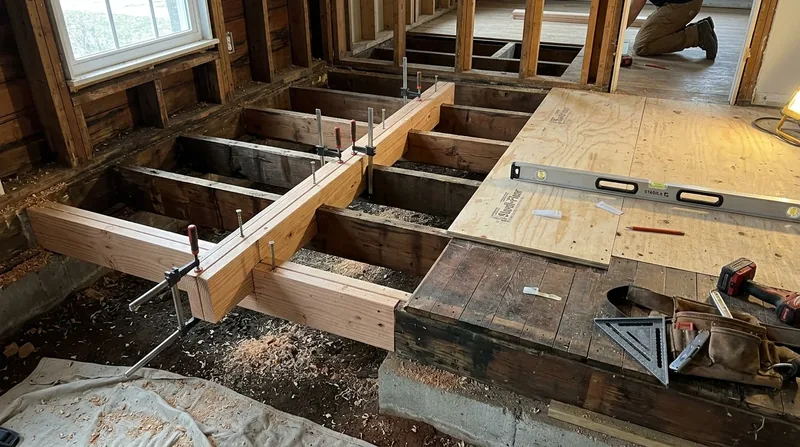




Sagging, bouncy, or soft floors in older San Francisco homes almost always trace to damaged joists or subfloor. The marine climate here keeps wood damp year-round, and the settlement of a century-old building stock puts constant stress on the framing that holds your floors up. Floor joist and subfloor repair restores the structural integrity of your floor system, eliminates the bounce, and stops water damage from spreading deeper into the frame. We sister compromised joists, replace sections of subfloor, and level floors before finishes go back down. Our work is backed by the same carpenters who do it, not a franchise crew that rotates through town.
Why Floor Joist and Subfloor Damage Matters in San Francisco Homes
San Francisco's fog, salt air, and winter rains create a perfect environment for wood rot in floor systems. Joists and subfloor sit close to exterior walls, crawl spaces, and sill plates where moisture accumulates. Once rot or water damage takes hold, it spreads quickly through the grain, weakening the wood's ability to carry load. A soft or spongy floor is not just uncomfortable, it signals that the structure underneath is failing. Left unaddressed, damage to floor framing spreads to rim joists, sill plates, and the posts and beams that support them.
- Soft, spongy, or visibly dark wood in joists or subfloor indicates active rot or water damage that will spread.
- Sagging or bouncy floors mean joists have lost load capacity and need sistering or replacement.
- Water stains on joists, rim joists, or sill plates show moisture is entering the frame and attacking the wood.
- Mold growth on wood surfaces signals sustained moisture and requires the source leak to be stopped before repair begins.
- Gaps opening between floor and walls, or doors sticking in frames, sometimes indicate joist settlement but always warrant inspection.
Addressing floor joist and subfloor damage early prevents the cost of replacing posts, beams, and sill plates later. The longer rot sits, the deeper it travels and the more of the frame it compromises.
Key info: San Francisco's older housing stock, from Victorians and Edwardians to 1920s-40s stucco-over-wood rows and mid-century Doelger tracts, all rely on wood-frame floors that settle and absorb moisture over decades. This is normal wear, not a crisis, but it does require repair. We inspect, explain what we find, and propose repair or replacement based on the wood's condition, not on a sales pitch.
For more on how water and rot damage spreads through wood framing, see our guide to wood rot and dry rot repair in San Francisco.
The San Francisco Department of Building Inspection requires permits for structural work, including joist replacement and subfloor repairs that alter load paths. Always check with the local building department before starting work.
How We Repair Floor Joists and Subfloor in San Francisco
Our process starts with a clear picture of what the wood tells us. We probe joists and subfloor with a screwdriver, take moisture readings, and assess how much wood is sound and how much is compromised. If a joist is partially damaged but the core is solid, we sister a new piece alongside it, bolting them together so they work as one unit. If a joist is too far gone, we remove it and drop in a new one. Subfloor comes up in sections, rotten plywood gets replaced, and we level the new subfloor before finish flooring goes back down.
- We inspect all joists, rim joists, and sill plates to map the full extent of damage.
- We remove any insulation, debris, or obstacles blocking access to the framing.
- We sister damaged joists by bolting a new joist alongside the compromised one, doubling the load capacity.
- We remove and replace subfloor plywood in sections, ensuring new sheets are properly fastened and level.
- We level the finished floor surface before you install new finish flooring, tile, or carpet.
- We document the work with photos and notes to help you file an insurance claim if needed.
The entire process takes precision and access. We work from the crawl space or basement, or we open the floor from above if that's the better route. Either way, we leave the subfloor tight and level.
Example: A Doelger-era home in San Mateo had a slow leak in the rim joist where the exterior wall met the foundation. The outer 2 feet of joists had soft, dark wood running the full length of the house. We sistered new joists alongside the bad ones, replaced the rim joist, and leveled the floor. The work took 5 days and cost less than replacing the entire joist system would have.
Learn more about our framing and structural carpentry approach to understand how we handle load-bearing repairs.
Methods for Repairing Floor Joists and Subfloor
| Approach | Description | Best for |
|---|---|---|
| Sistering | Bolting a new joist alongside a damaged one so they share the load. | Joists with partial rot or damage where the core wood is still sound and can be sistered without removing the old piece. |
| Full Joist Replacement | Removing a damaged joist and dropping in a new one of matching size and species. | Joists that are too far gone to sister, or where access allows removal without disturbing the floor above. |
| Subfloor Patching | Cutting out rotten plywood and sistering in new sheets, properly fastened to the joists below. | Localized subfloor rot or water damage that does not extend across multiple joists or the entire floor. |
| Rim Joist and Sill Plate Repair | Replacing the rim joist or sill plate where it has rotted due to moisture entry or poor drainage. | Damage concentrated at the perimeter of the house, especially where exterior walls meet the foundation or crawl space. |
Floor Joist and Subfloor Repair Cost in San Francisco: What to Expect
Floor joist and subfloor repair in San Francisco typically starts at $1,800 for small, localized damage and scales up based on the extent of rot, the number of joists affected, and how much subfloor needs to come out. A single sistered joist costs less than a full replacement. Replacing multiple joists or large sections of subfloor, especially if rim joists or sill plates are involved, will cost more. Access matters too: if we can work from the crawl space, the job moves faster. If we have to open the floor from above, that adds time and cost.
The best way to know what your floor repair will cost is to get a free estimate. We come out, probe the wood, measure the damage, and give you a clear price. We do not charge to look, and we do not pressure you to decide on the spot. If you want a second opinion, that is smart practice. Two or three estimates help you understand the scope and the market price for your area.
For detailed pricing and examples of what different repair types cost, see our pricing overview. Call us at (628) 285-5429 to schedule a free estimate, or use our contact form to request an appointment.
Floor Joist and Subfloor Repair Near Me: What San Francisco Homeowners Should Know When Hiring a Carpenter
Hiring the right carpenter for floor joist and subfloor repair means finding someone who knows how to diagnose the damage, propose a solution that fits the budget, and do the work cleanly without drama. Here is what to look for.
- Ask whether the carpenter will do the work himself or send a crew, and whether the same crew will be there from start to finish.
- Request references from past floor repair jobs and call at least two to ask about quality, timeline, and clean-up.
- Get written estimates from two or three carpenters so you can compare scope, method, and price.
- Confirm that the carpenter is fully insured and carries workers compensation, so you are not liable if someone gets hurt on your property.
- Ask whether a permit is needed for your job and who will pull it, because structural work in San Francisco often requires a permit from the Department of Building Inspection.
- Understand what happens if the carpenter finds more damage than expected once the floor is open, and make sure the estimate includes a process for change orders.
A carpenter who takes time to explain the damage, shows you the wood, and tells you honestly whether repair or replacement makes sense is worth the call. Avoid anyone who pushes you to decide fast or who claims they can guarantee the wood is rot-free after the job. Wood is honest, and so should your carpenter be.
Ready to move forward? Contact us for a free estimate, or call (628) 285-5429 to talk about your floor.
Floor Joist & Subfloor Repair in San Francisco: Pricing Guide
| Service | Price | Details |
|---|---|---|
| Single joist sistering | Starting at $1,800 | Bolting a new joist alongside one compromised joist, including labor and material |
| Full joist replacement | Starting at $2,200 | Removing and replacing one joist with new wood, properly sized and fastened |
| Subfloor patching | Starting at $1,500 | Removing rotten plywood and sistering in new sheets, per 100 sq ft |
| Rim joist or sill plate repair | Starting at $2,500 | Replacing rim joist or sill plate where rot has compromised the perimeter framing |
| Multi-joist or large-scale repair | On estimate | Free on-site assessment and written quote for complex jobs involving multiple joists, extensive subfloor damage, or structural concerns |
| Estimate and travel | Free | No charge for inspection and estimate in San Francisco and surrounding service areas; response within 24 hours at (628) 285-5429 |
Indicative pricing, free personalized estimate within 24h at (628) 285-5429.


