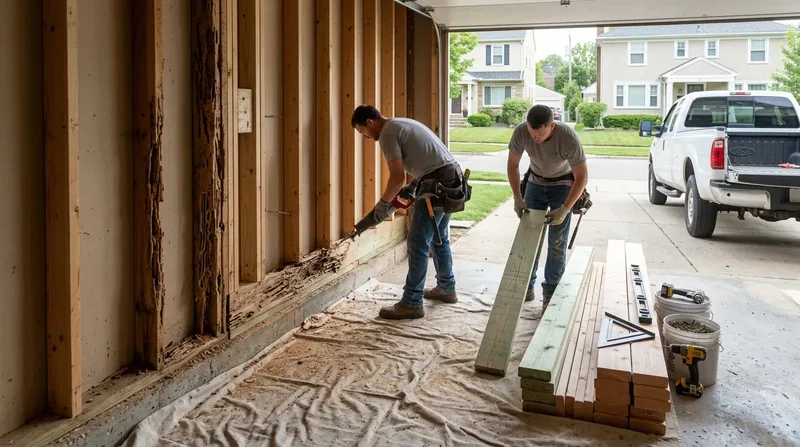




Termite Damage Repair in San Francisco means replacing the wood that termites have already eaten. After your pest inspector confirms an infestation and the exterminator treats it, the damaged studs, sills, joists, and trim remain structurally compromised. San Francisco's older housing stock, from Victorian and Edwardian homes to mid-century Doelger tracts, sits on wood frames that have weathered a century of marine fog and salt air. Termite damage compounds the challenge of maintaining these buildings. We remove and replace termite-damaged wood members, restoring full structural integrity so your home is solid again. Our work is backed by an EPA Lead-Safe certification, essential in a city where pre-1978 paint is the norm.
Why Termite Damage Repair Matters in San Francisco's Older Homes
Termites don't kill wood overnight, but they hollow it out from the inside. A stud that looks solid on the outside may be 60 or 70 percent gone by the time you see the damage. In San Francisco, where buildings have settled for decades and load-bearing walls carry the weight of upper floors, even partial wood loss in a critical member creates a structural problem that worsens over time. The marine layer keeps exterior wood damp year-round, which speeds decay and makes termite damage harder to spot. Ignoring it doesn't make it go away; it makes the repair more expensive and the risk real.
- We identify which wood members are damaged and which are still sound by probing, measuring, and comparing to your pest inspection report.
- We remove termite-eaten sections of studs, sills, rim joists, and subfloor, taking care to support the structure above as we work.
- We sister new framing alongside existing members or replace sections outright, depending on how much damage is present.
- We restore the wood to its original dimension and load-bearing capacity so your floor is level and your walls are plumb again.
- We match species and finish where the repair is visible, so the work blends with the existing structure.
Addressing termite damage promptly keeps repair costs predictable and prevents secondary problems like floor sag, door binding, and water infiltration at the damaged joint.
Local context: San Francisco's Victorians and Edwardians often have original redwood framing and sill plates that termites find attractive. The salt air and marine fog create the damp conditions termites love. A thorough inspection and prompt repair keeps these homes standing strong for another generation.
For more information on wood damage and repair options, see our page on Wood Rot and Dry Rot Repair, which covers related structural wood problems common in San Francisco homes.
The San Francisco Department of Building Inspection has building permit requirements for structural work; structural repairs often qualify, so confirm with the city before starting.
How We Repair Termite Damage: A Step-by-Step Approach
Our process starts with your pest inspection report and a detailed assessment of the damage. We don't guess at what's salvageable and what needs replacement. We probe the wood, measure the loss, and explain what we find in plain terms. Then we build a repair plan that restores the structure without unnecessary replacement. Each step is documented so you have a record of the work for insurance or future reference.
- We obtain a copy of your termite inspection report and walk the property to identify all affected areas.
- We probe suspect wood members with a sharp tool to find the extent of the damage beneath the surface.
- We measure the loss, calculate how much wood is gone, and determine if repair or replacement is the right choice.
- We shore up the structure above the damaged area so it stays stable while we remove the bad wood.
- We cut out and remove the damaged section, taking care to preserve sound wood and protect nearby finishes.
- We install new wood of the same species and dimension, secured with fasteners appropriate to the load and location.
- We finish the repair to match the surrounding wood, whether that means stain, paint, or leaving it raw for later finishing.
The result is a structural repair that is as strong as the original and built to last.
Example from the field: A Daly City homeowner found termites in a floor joist under the master bedroom. The joist was 40 percent hollowed out but still had a solid outer shell. We sistered a new pressure-treated joist alongside it, bolted them together, and the floor was level and solid again. The repair cost less than half of what a full joist replacement would have, and the floor is now good for another 50 years.
For homes with extensive damage, see our service on Floor Joist and Subfloor Repair, which covers larger-scale structural restoration.
Repair Methods and When to Use Each One
| Approach | Description | Best for |
|---|---|---|
| Sistering | Installing a new member alongside the damaged one and bolting or fastening them together to share the load. | Joists, studs, and beams where the outer shell is still sound and the member can be reinforced without removal. |
| Sectional Replacement | Cutting out the damaged section and splicing in new wood of the same dimension, using a scarf joint or butt joint with fasteners. | Sill plates, rim joists, and studs where damage is localized and the member can be cut without loss of structural integrity. |
| Full Member Replacement | Removing the entire damaged member and installing a new one of the same species and dimension. | Studs, joists, and trim where damage is extensive or where the member can be replaced without temporary shoring. |
| Subfloor Patching | Removing damaged subfloor panels and installing new plywood or dimensional lumber, fastened to the joists below. | Subfloor damage over a localized area where joists are sound and the new flooring can be tied to existing structure. |
Each method is chosen based on the location of the damage, the load the member carries, and how much wood is compromised. We explain the choice and the trade-offs before we start.
Termite Damage Repair Cost in San Francisco: What to Expect
Termite damage repair in San Francisco typically starts at $1,200 for a localized repair like a single damaged stud or a section of sill plate. Larger jobs, such as replacing multiple joists or an entire rim joist, run $3,000 to $8,000 or more depending on the scope, access, and whether the structure needs temporary shoring while you work. The cost depends on how much wood is damaged, where it is located, how hard it is to reach, and whether the repair is structural or cosmetic.
A few factors move the price up or down. If the damage is in a basement or crawlspace, access is easier and the cost is lower. If it's in a wall or under a floor, we may need to remove finishes to see the damage and restore them afterward, which adds time and cost. If the member is load-bearing, we need to shore it up while we work, which takes skill and time. If the damage is deep in the structure, like a beam or band joist, replacement is more involved than patching a trim board.
The best way to know what your job will cost is to get a free on-site estimate. We assess the damage, explain what needs to happen, and give you a realistic price. For a detailed look at how we price our work, visit our pricing page.
Hiring a Termite Damage Repair Carpenter Near Me: What San Francisco Homeowners Should Know
When you're looking for termite damage repair near San Francisco, you're trusting someone to cut into your house and make it structurally sound again. That's not a decision to make on price alone. A qualified carpenter knows how to assess damage correctly, choose the right repair method, and execute it without creating new problems. Ask how long they've been in business, whether they've worked on homes like yours, and whether they can show you examples of similar repairs they've done. Check that they are fully insured and ask to see proof of coverage.
- Verify that the carpenter is fully insured with general liability and workers compensation, and ask for a certificate of insurance before work starts.
- Get estimates from at least two or three carpenters so you can compare the scope of work, the method proposed, and the price.
- Ask for references from past clients and call them to learn how the work went and whether the carpenter was professional and clean.
- Confirm whether permits are required for your repair with the San Francisco Department of Building Inspection, and make sure the carpenter knows the local rules.
- If your home is in a historic district or subject to HOA rules, check whether your repair needs approval before you start.
A good carpenter explains the damage and the repair in language you understand, shows you the work as it progresses, and stands behind the result.
Ready to get started? Contact us for a free estimate at (628) 285-5429. We serve San Francisco and surrounding areas, and we respond within 24 hours.
Termite Damage Repair in San Francisco: Pricing Guide
| Service | Price | Details |
|---|---|---|
| Single damaged member repair (stud, sill, trim) | Starting at $1,200 | Localized damage removed and replaced or sistered |
| Multiple joists or rim joist repair | Starting at $3,500 | Sectional replacement or sistering across multiple members |
| Subfloor damage repair | Starting at $2,800 | Damaged subfloor panels removed and replaced with new lumber |
| Complex structural repair (load-bearing walls, shoring required) | On estimate | Assessed on site based on extent of damage and access |
| Travel | Included | in San Francisco and surrounding areas |
| Estimate | Free | Response within 24 hours at (628) 285-5429 |
Indicative pricing, free personalized estimate within 24h at (628) 285-5429.


