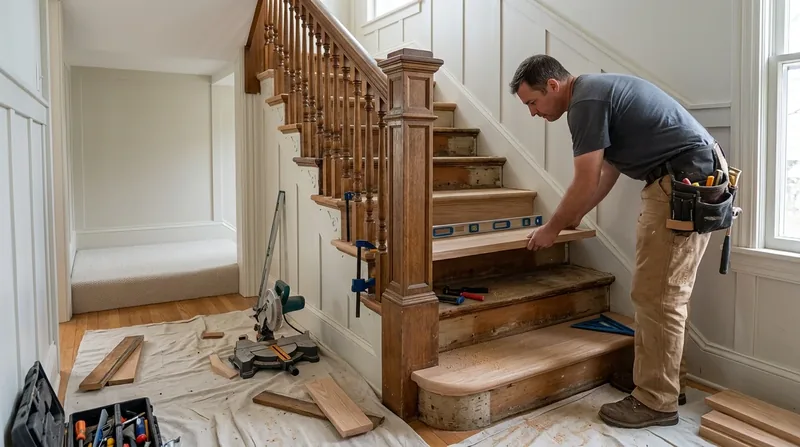




San Francisco's staircases tell the story of the city: Victorian and Edwardian grand stairs with ornate balusters, 1920s-40s narrow back stairs in tight row houses, and mid-century treads worn smooth by a century of daily use. When those stairs creak, shift, or their railings loosen, the problem is usually not catastrophic, but it is real. Stair and railing repair in San Francisco requires understanding both the age and settlement of the building and the wear patterns specific to our marine climate. We repair and rebuild the staircases San Francisco homes climb every day, restore period railings, and install code-compliant handrails and attic ladders.
Why Stair and Railing Repair Matters in San Francisco's Older Homes
San Francisco's building stock settled into its final position decades ago. A staircase that squeaks or has a slight slope is usually not a structural emergency, it is the normal condition of an old house. But loose treads, worn stringers, and wobbly balusters are safety issues that get worse with use. The salt air and marine layer keep wood damp year-round, so exterior stairs and exposed interior stairs near windows develop rot and soft spots faster than in drier climates. A railing that feels loose underfoot or a handrail that moves when you grip it deserves immediate attention, not because the house is falling apart, but because a fall down stairs is serious.
- We inspect treads, stringers, and risers for soft wood, cupping, and movement caused by settlement or moisture.
- We replace or sister damaged stringers and repair or replace individual treads without removing the entire staircase when possible.
- We install or repair balusters, newel posts, and handrails to meet current code while respecting the period style of Victorian, Edwardian, and mid-century homes.
- We repair exterior stairs and landings where salt air and damp have worked into the grain, and we use materials suited to San Francisco's climate.
- We document damage for insurance claims and help you understand whether repair is enough or replacement is the honest answer.
Stair safety is not something to defer. A loose tread or railing can be fixed in days, not weeks.
Local example: A Victorian in the Mission District with original open-string stairs had treads that had cupped and split from a century of foot traffic and seasonal moisture swings. We replaced the worn treads, reinforced the stringers where they had cracked, and left the original ornate balusters and newel post intact. The staircase now looks and feels as solid as it did in 1890.
For more on how moisture and settlement affect wood in San Francisco homes, see our wood rot and dry rot repair page.
The San Francisco Building Department publishes guidelines on stair and railing code compliance. For details on what your staircase must meet, visit the SF Building Department website.
How We Repair and Rebuild Stairs in San Francisco
Every staircase is different. A squeaky tread might need only a screw driven through the riser into the tread from below. A soft stringer might need a sister board bolted alongside it to carry the load. A railing with loose balusters might need only new fasteners, or it might need the entire baluster and newel assembly rebuilt. We start with a close look at what is moving, what is soft, and what has settled, then we propose repair before replacement when the wood will hold it.
- We walk the staircase with you, listen for squeaks and creaks, and check for movement in treads, risers, stringers, and railings.
- We probe for soft wood with a sharp tool and test for rot or moisture damage that affects the repair strategy.
- We measure and photograph the existing baluster style, newel post, and handrail profile so replacements match the period and original aesthetic.
- We remove only what must come out, repair or replace the damaged member, and reinstall or rebuild the railing to code while keeping the original character.
- We test the repair for movement and solidity before we call the job complete.
The goal is a staircase that is safe, solid, and looks like it belongs in your home.
Local example: An Edwardian in Pacifica had an exterior back stair with balusters that had rotted where they met the stringer. Rather than replace the entire railing, we removed the damaged balusters, cut out the soft wood from the stringer, sistered in a new piece of pressure-treated Douglas fir, and installed new balusters that matched the originals in profile and spacing. The railing now passes code and looks original.
For information on how we approach finish carpentry and custom woodwork, see our finish and trim carpentry page.
| Repair Type | What It Is | When We Use It |
|---|---|---|
| Tread Replacement | Remove a worn or damaged tread and install a new one that matches the profile and finish of the staircase. | When the tread is cupped, cracked, soft, or has visible rot or wear that affects safety or appearance. |
| Stringer Repair or Sistering | Reinforce or replace the angled support board that carries the treads and risers. | When the stringer has soft wood, has cracked, or shows movement that affects the tread or railing alignment. |
| Baluster and Newel Repair | Replace individual balusters or rebuild the newel post and fasteners to code. | When balusters are loose, cracked, or rotted, or when the newel post has shifted and the railing feels unstable. |
| Handrail Installation | Install a new handrail or repair an existing one to meet code height, diameter, and fastening requirements. | When a railing has no handrail, the handrail is damaged or loose, or code compliance is required for accessibility or safety. |
| Complete Staircase Rebuild | Remove and rebuild the entire staircase, treads, stringers, and railing as a unit. | When the staircase is severely damaged, settlement has made it unsafe, or multiple components need replacement and repair piecemeal is not cost-effective. |
Stair and Railing Repair Cost in San Francisco: What to Expect
Stair and railing repair in San Francisco starts at $600 for simple jobs like tightening loose balusters or replacing a single damaged tread. Most repairs run between $1,200 and $3,500 depending on how much wood is soft, how many treads or balusters need replacement, and whether the stringer is compromised. A complete staircase rebuild can run $5,000 to $10,000 or more if the stringers are severely damaged or the railing must be rebuilt to code.
The factors that move the cost are straightforward. A staircase with one soft tread costs less than one where three treads and the stringer need work. An exterior stair exposed to salt air and damp will have more rot than an interior stair in a dry hallway. A Victorian with ornate balusters costs more to match and replace than a simple mid-century baluster. And if the staircase has shifted so much that stringers are cracked and treads are uneven, the work is more involved.
We recommend getting estimates from two or three carpenters. You will see variation in price and approach, and that comparison will help you understand what is honest work and what is overpriced. Our estimate is free, and we respond within 24 hours. Call us at (628) 285-5429 or visit our pricing page for more detail on how we bid stair work.
Stair and Railing Repair Near Me: What San Francisco Homeowners Should Know When Hiring
Stair and railing repair is not a job for a handyman with a power drill. A loose railing or soft tread is a safety issue, and the person who fixes it should understand wood, fasteners, code requirements, and the settlement patterns of San Francisco's older homes. When you are looking for a carpenter near you, ask the right questions and check references.
- Ask whether the carpenter is fully insured and can provide a certificate of insurance before work begins.
- Request references from recent stair and railing jobs in San Francisco or nearby areas, and call them to ask about the quality of the work and whether the job stayed on schedule.
- Clarify whether permits are required for your repair. Interior stair repairs usually do not require a permit, but exterior stairs and railing changes sometimes do. The San Francisco Building Department can confirm the threshold for your project.
- Ask the carpenter to explain what is soft, what is moving, and what must be replaced versus what can be repaired. If they recommend replacing the entire staircase when one tread is damaged, get a second opinion.
- Confirm that the carpenter will match the existing baluster style, handrail profile, and finish so the repair looks original and not like a patch job.
A good carpenter will take time to explain what is wrong and why, will show you the soft wood or movement, and will propose repair before replacement. That is the sign of someone who knows the trade and cares about your home.
Ready to get started? Contact us for a free estimate. We serve San Francisco and the surrounding Bay Area, and we respond to calls and emails within 24 hours.
Stair & Railing Repair in San Francisco: Pricing Guide
| Service | Price | Details |
|---|---|---|
| Single Tread Replacement | Starting at $600 | Remove and replace one damaged or worn tread with new wood matching the staircase profile |
| Baluster or Newel Repair | Starting at $450 per baluster | Replace loose or damaged balusters, or repair and reinforce the newel post |
| Stringer Repair or Sistering | Starting at $1,200 | Reinforce or repair the main support beam of the staircase where it has cracked or softened |
| Complete Stair and Railing Rebuild | Starting at $4,500 | Full removal and rebuild of treads, stringers, risers, balusters, newel post, and handrail |
| Estimate | Free | On-site assessment and written estimate within 24 hours at (628) 285-5429 |
Indicative pricing, free personalized estimate within 24h at (628) 285-5429.


