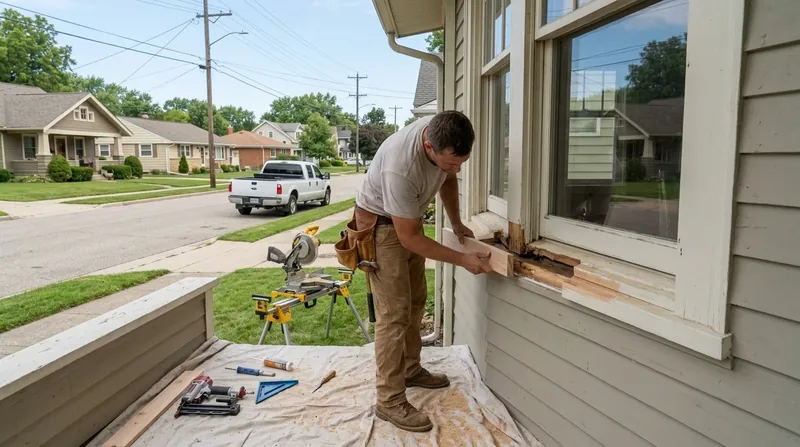




San Francisco's marine fog belt and salt air create a year-round environment where wood rot and dry rot repair is not a seasonal concern but a structural necessity. Our older housing stock, from Victorian and Edwardian homes to 1920s stucco-over-wood rows and mid-century tracts, relies on wood framing that faces constant moisture exposure. When rot takes hold in sill plates, floor joists, rim joists, or exterior trim, it weakens the structure and spreads quietly until visible damage appears. We cut out decayed wood, treat surrounding framing, and rebuild with rot-resistant lumber, a permanent repair that restores integrity without unnecessary replacement. This is the work that matters in San Francisco.
Why Wood Rot and Dry Rot Repair Matters in San Francisco
The fog and salt spray that define San Francisco's climate keep exterior wood perpetually damp. Dry rot (despite its name) thrives in wood that stays moist for extended periods, breaking down the cellular structure from the inside. Unlike termite damage, which leaves galleries and frass, dry rot spreads through the wood grain and can compromise load-bearing members, floor joists, and structural sill plates without obvious signs until the damage is advanced. Winter rains and spring storms expose leaks that have been quietly rotting framing for months. Addressing rot early prevents costlier structural repairs and keeps your home safe and level.
- Rot in sill plates and rim joists allows water to migrate upward into wall cavities and floor systems, compounding damage over time.
- Decayed floor joists or subfloor create soft spots, bouncy floors, and eventual sagging that worsens settlement and door sticking.
- Exterior trim and fascia rot allows water to penetrate behind siding and into the framing cavity beneath.
- Untreated rot spreads to adjacent sound wood, doubling the repair scope and cost within a few years.
Early detection and repair preserve the integrity of your framing and prevent exponential cost growth.
Key info: San Francisco's Department of Building Inspection requires permits for any structural repair involving load-bearing walls, beams, joists, or exterior work that alters the building envelope. We work with the DBI requirements and help coordinate inspections as needed. See the SF Department of Building Inspection for specific thresholds and scope requirements.
How We Repair Wood Rot and Dry Rot in San Francisco Homes
Our repair process is straightforward and field-tested. We start with a detailed inspection to map the extent of decay, identify the moisture source, and determine which wood must be removed and which can be treated and preserved. We remove decayed framing and trim carefully, install temporary support if needed for load-bearing members, treat surrounding sound wood with a wood preservative, and rebuild with pressure-treated or naturally rot-resistant lumber sized to match the original framing. The result is a permanent repair that matches the structure's original capacity.
- We inspect the affected area, probe for decay depth, and identify the moisture source (leak, poor drainage, condensation, or splash-back).
- We remove decayed wood in sections, taking care to avoid unnecessary demolition of sound material.
- We treat exposed sound wood with a wood preservative to arrest any incipient decay.
- We install new framing, trim, or siding in rot-resistant lumber, sized and fastened to match the original structural intent.
- We address the moisture source, whether that means rerouting gutters, sealing cracks, improving drainage, or repairing the leak that started the rot.
This methodical approach means your home is structurally sound and the rot does not return.
Local example: A Victorian in the Mission District with original 1890s redwood sill plates showed rot in the front bay window base where water was splashing back from the foundation. We removed the decayed sill, treated the rim joist and subfloor above, and installed new pressure-treated Douglas fir sill plate with proper flashing and drainage. The bay window is now level and dry, and the repair will outlast the original.
Wood Rot Repair Methods and Approaches
| Approach | Description | Best for |
|---|---|---|
| Localized removal and rebuild | Cut out decayed section, treat surrounding wood, install new lumber matched to original size and species. | Rot confined to one framing member or trim section, moisture source identified and controlled. |
| Sistering | Install a new member alongside a partially decayed joist or beam, bolted and fastened to share the load, allowing the weakened original to remain in place. | Moderate decay in load-bearing joists or beams where full replacement would require extensive temporary support and ceiling work. |
| Complete member replacement | Remove the entire decayed framing member, install temporary support, and install new lumber to match original dimensions and grade. | Extensive decay affecting the majority of a joist, beam, or load-bearing member, or decay near critical connections. |
| Exterior trim and fascia replacement | Remove rotted trim, fascia, or soffit, treat framing behind it, and install new exterior-grade lumber with proper flashing and paint. | Rot in overhangs, eaves, trim boards, or fascia that does not affect framing but allows water to penetrate further. |
Each approach preserves what is sound and replaces only what must be replaced, keeping your repair cost realistic and your home structurally intact.
Wood Rot and Dry Rot Repair Cost in San Francisco: What to Expect
The cost of wood rot repair in San Francisco depends on the extent of decay, the location of the damage, and the repair method. A small, localized rot repair in exterior trim might start at $650 and rise quickly if the damage extends into framing or affects multiple members. A sill plate or rim joist repair, which involves more extensive work and possible temporary support, typically runs $1,500 to $3,500 or more depending on access and the length of framing affected. Large structural repairs involving sistering or full joist replacement can exceed $5,000 and may require engineering and permits. The best approach is to get a detailed estimate that breaks down removal, treatment, lumber cost, labor, and any permits or inspections required.
Several factors affect the final price. The depth and spread of decay determines how much wood must be removed. Access and location matter greatly: rot in a basement sill plate is easier to repair than rot in a second-story overhang or behind living spaces. Load-bearing status affects cost because structural repairs require temporary support during work. Moisture source identification and repair adds cost but prevents the rot from returning. Permits and inspections are required for structural work and add timeline and cost. Material choice (pressure-treated lumber, naturally rot-resistant species like redwood or cedar, or engineered lumber) affects price and longevity.
We recommend getting two or three estimates from experienced carpenters. A low estimate that glosses over the moisture source or proposes cosmetic patching instead of real repair will cost you more in five years when the rot returns. Our estimate is free and includes a detailed breakdown of scope, materials, timeline, and any permits required. See our full pricing overview for typical ranges and call (628) 285-5429 to schedule an inspection.
Wood Rot and Dry Rot Repair Near Me: What San Francisco Homeowners Should Know When Hiring
Choosing the right carpenter for wood rot repair means understanding what to look for beyond price. A qualified carpenter brings field experience, knowledge of San Francisco's older housing stock and its common pathologies, and a commitment to permanent repair rather than cosmetic patching. Here are the essentials to evaluate.
- Verify that the carpenter is fully insured and carries general liability and workers compensation coverage, protecting you if an accident occurs on your property.
- Ask for references from recent wood rot or structural repair jobs and follow up with homeowners about the quality of work and whether the repair has held.
- Confirm that the carpenter understands San Francisco Building Code and DBI permit requirements for structural work, and that they will coordinate with the building department as needed.
- Request a detailed written estimate that identifies the decay, explains the repair method, lists materials and labor, and addresses the moisture source.
- Understand that structural repairs affecting load-bearing members may require a licensed structural engineer to size beams or joists and sign off on the design; the carpenter can help coordinate this.
- Check whether the carpenter has experience with older homes and their quirks: settled foundations, out-of-square framing, and original millwork that must be respected and repaired, not demolished.
A carpenter who explains the problem clearly, proposes repair before replacement, and stands behind their work is worth the call. Contact us at San Francisco Carpentry for a free estimate and to discuss your specific situation.
Wood Rot & Dry Rot Repair in San Francisco: Pricing Guide
| Service | Price | Details |
|---|---|---|
| Small exterior trim or fascia rot repair | Starting at $650 | Localized decay in trim, fascia, or soffit with no framing involvement |
| Sill plate or rim joist repair | Starting at $1,500 | Includes removal of decayed sill, treatment, new pressure-treated lumber, and flashing |
| Floor joist or beam sistering or replacement | Starting at $2,500 | Depends on joist length, load-bearing status, and whether temporary support is required |
| Complex or large-scale structural rot repair | On estimate | Multiple members, engineering, permits, and moisture remediation included |
| Travel and estimate | Free estimate | Response within 24 hours at (628) 285-5429; travel included in San Francisco and surrounding areas |
Indicative pricing, free personalized estimate within 24h at (628) 285-5429.


